
How much does a home’s age actually impact its value?
Does a Home’s Age Really Matter?
How much does a home’s age actually impact its value?
We know that brand-new homes typically sell at a premium compared to older properties. But how significant is that difference — especially here in the Mid-Valley?
Curious about the numbers, I analyzed single family home sales in 2025 across the Mid-Valley communities I closely follow: Basalt, Missouri Heights, Carbondale, and the Crystal River Valley (includes Redstone and Marble).
What I discovered was both fascinating and insightful — and I hope the data below helps provide clarity about how age influences value in our local market:
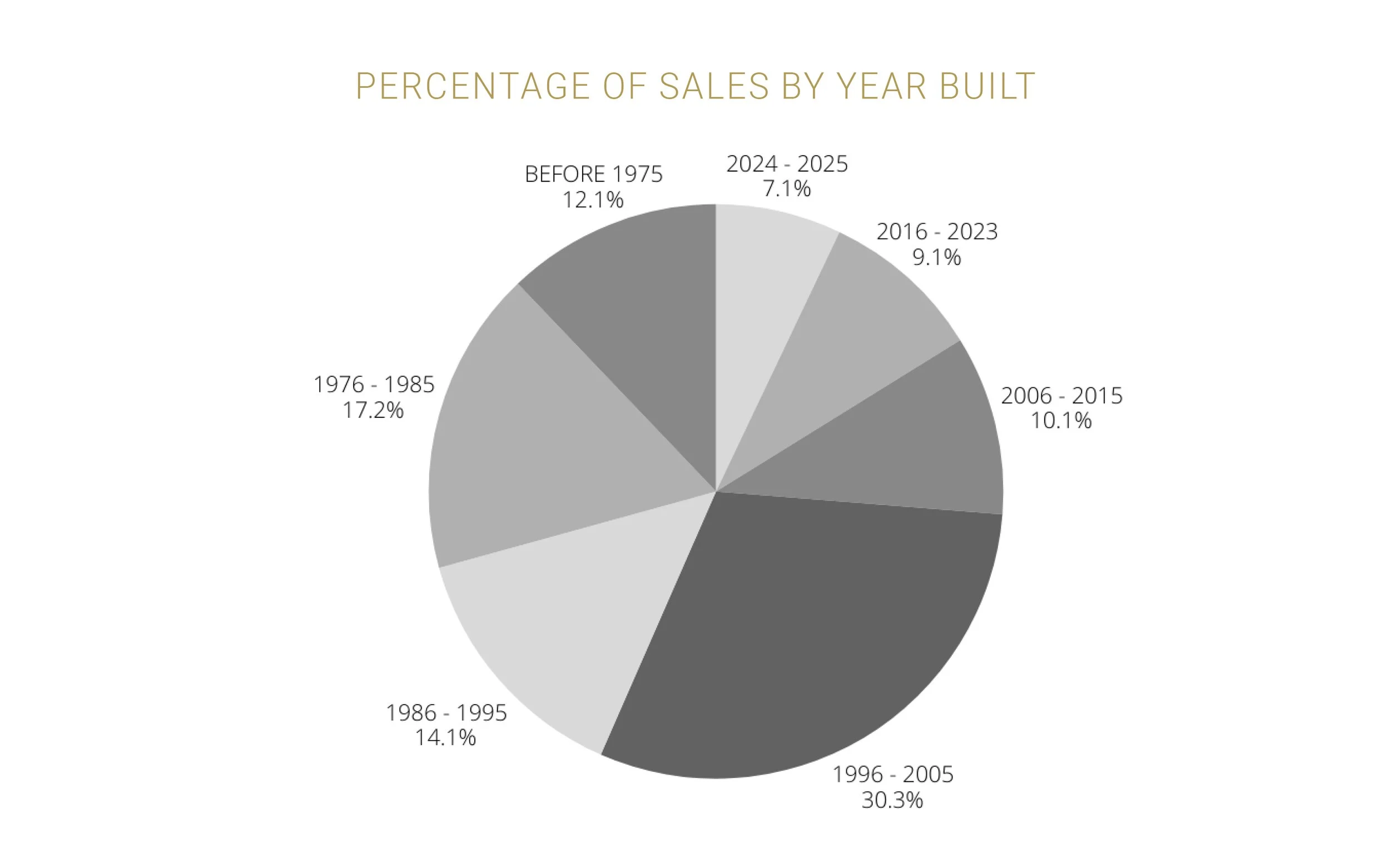
In 2025, 84% of all single family home sales were homes more than 20 years old (built prior to 2006).
Even more telling, 73% — nearly three-quarters — were over 30 years old (built prior to 1996).
By contrast, only 7% of single family homes sold in 2025 were brand-new construction (built in 2024–2025).
What’s hopefully most valuable here is that the vast majority of available homes in the Mid-Valley are 20–30+ years old. For buyers, this helps set realistic expectations about our inventory and what you’re likely to encounter while home shopping in the area.
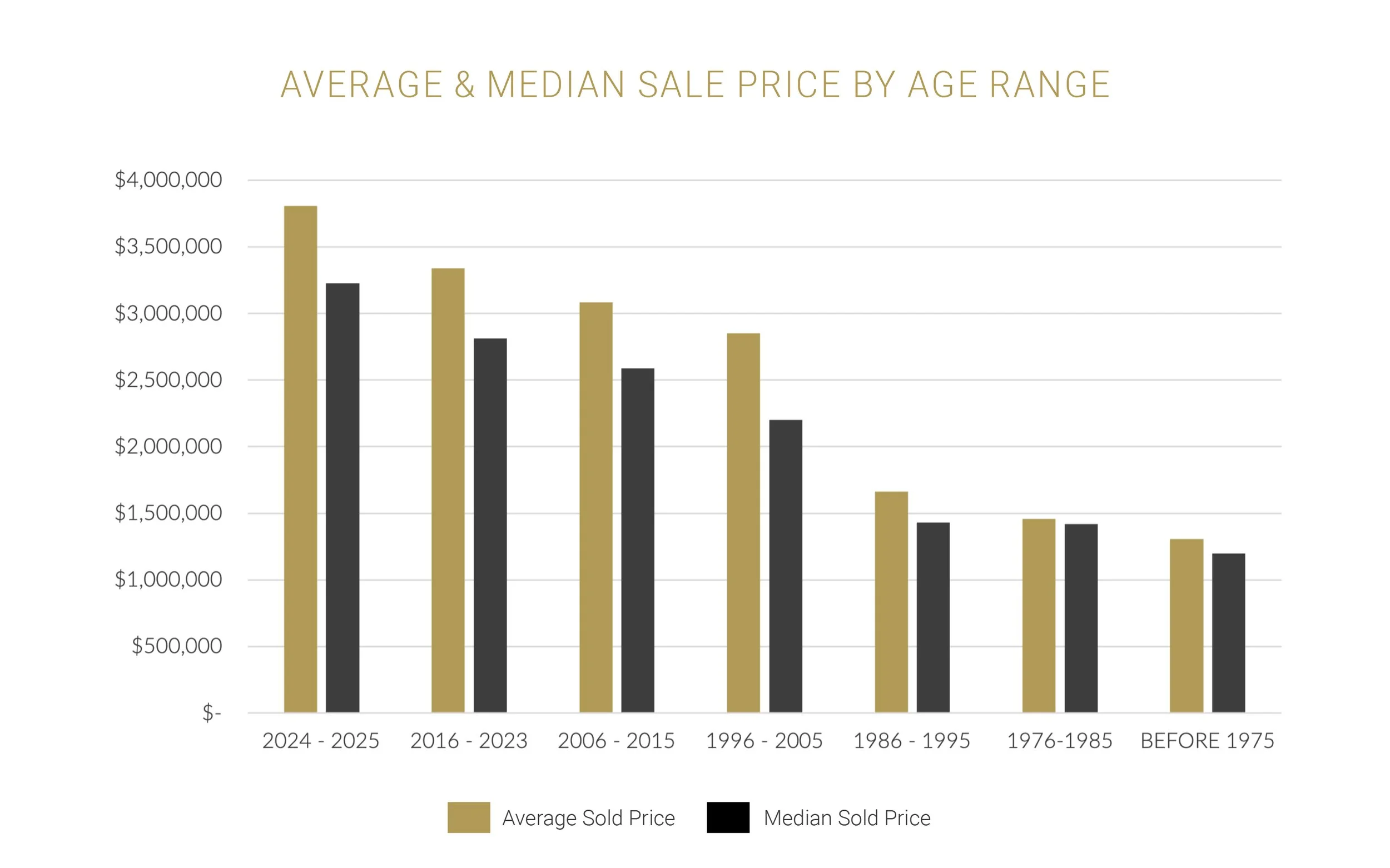
In 2025, newly built homes (2024–2025 construction) sold for an average of $3.8 million, with a median sale price of $3,225,000.
By comparison, homes built prior to 1975 sold for an average of $1.3 million, with a median of $1.2 million — less than half the average price of new construction.
Looking at the broader market, the majority of homes sold were 20 years or older. When we group together all homes built prior to 2006, the average sale price comes in at approximately $2 million.
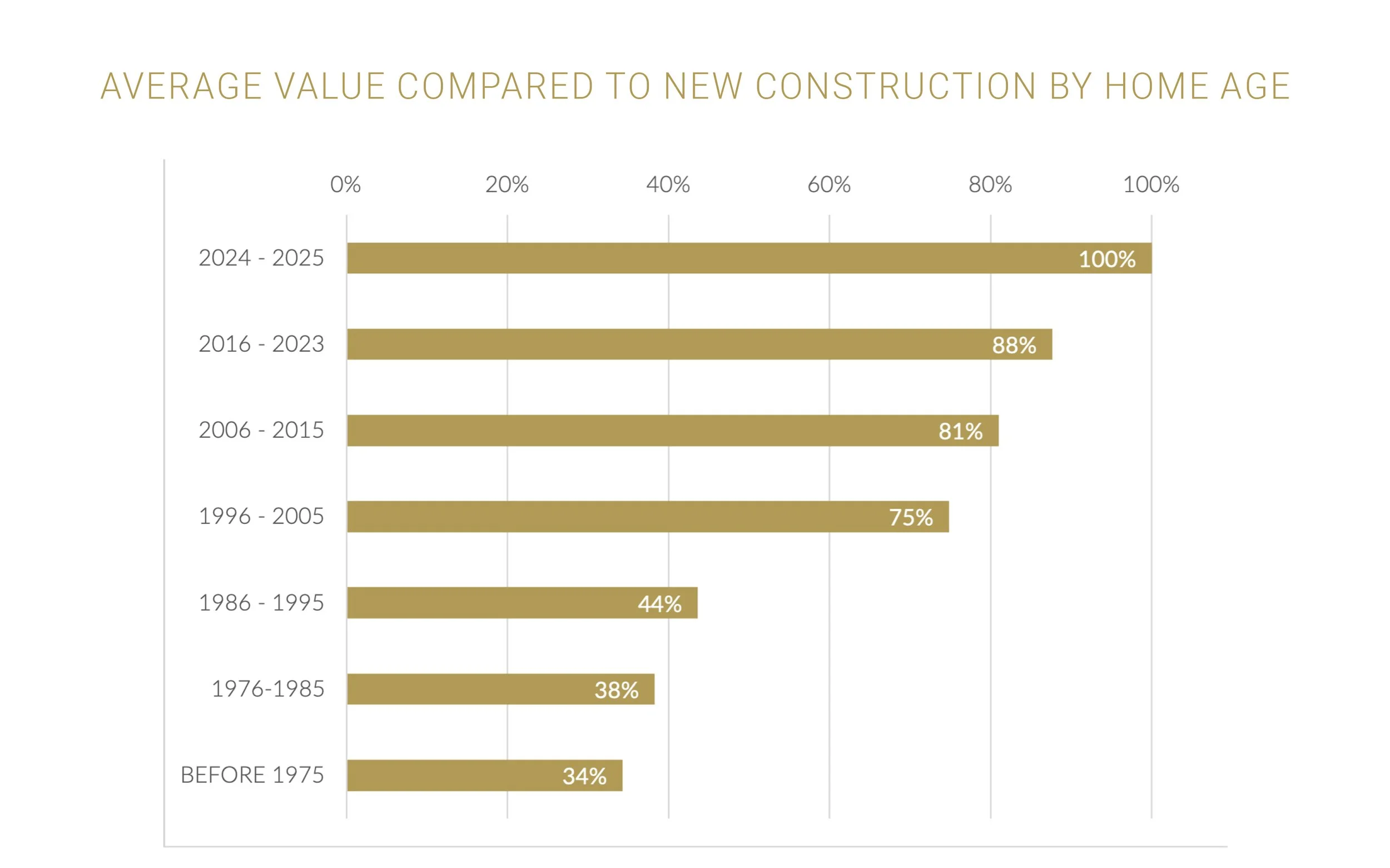
Homes built between 2016 and 2023 sold for an average of about 88% of the price of brand-new construction — meaning buyers typically paid roughly 12% less than they would for a newly built home.
By comparison, homes built prior to 1975 sold for an average of about 34% of the price of new construction — a significantly larger gap.
How Home Age Impacts Value in the Mid-Valley
It’s no surprise that older homes typically sell for less than brand-new construction. Since most homes sold in the Mid-Valley are more than 20 years old, many are priced between approximately 34% and 75% of what a newly built home sells for.
That said, these are broad market statistics. Each neighborhood has its own pricing trends and value characteristics, as well as appeal and demand.
For example, Blue Lake is a fully built-out community with no new construction. Homes there were built between 1989 and 2000, with an average sale price of $1,485,000. Compare that to River Valley Ranch, where about 19% of sales are new construction (versus 7% in all of Mid-Valley). River Valley Ranch homes were built between 1998 and 2025 and have an average sale price of $2,750,000.
Other factors also influence value compared to averages within a neighborhood. Features like lakefront location can increase value, while factors such as modular construction may decrease it. Inventory also plays a role — if only one home is available, buyers may be willing to pay a premium.
Maintenance Matters
For homes that are 20–30 years old (or older), the condition of major systems significantly impacts value. These include:
Roof
Septic systems
Heating and cooling systems
Exterior siding
Windows
Buyers expect many of these systems to be updated after 25–30 years, depending on their quality and condition. If they are not, buyers often factor the cost of replacement into their offer price, especially if those expenses are likely within the next 2–5 years.
In my experience, most buyers prefer a well-maintained home with updated systems over one with cosmetic upgrades but aging infrastructure. Knowing the roof qualifies for insurance or the furnace won’t need immediate replacement gives buyers confidence and allows them to remodel to their own tastes on their own timeline.
Upgrades vs. Maintenance
Improvements such as kitchen remodels, additions, new cooling systems, or custom landscaping can raise a home’s value above neighborhood averages — but typically only if major systems have already been maintained or updated.
In reality, most homes have a mix. For example, a newer kitchen paired with a 28-year-old roof. Both have an impact on the value and the move-in-ready attractiveness of your home. It’s a bit of a sliding scale and something that you and your REALTOR® will discuss when determining your asking or offer price strategy.
.
.
.
Ultimately, I hope all of this data and commentary provides some more insight into our local market and what to expect. As always, please feel free to reach out to me at anytime with questions!